Backgroound Image

THE PENDULUM SWING OF BLACK LIBERATION

Andrei Martyanov Also Explains The Timing.

Russia is technologically and militarily in a strong position and currently can survive a break with the ‘western’ world without too much trouble. The U.S. is in disarray and NATO not ready to fight. It is simply the right moment.

Fascism has established itself in a most disguised and efficient manner in this country. It feels so secure that the leaders allow us the luxury of a faint protest. Take protest too far, however, and they will show their other face. Doors will be kicked down in the night and machine-gun fire and buckshot will become the medium of exchange.

— George Jackson, Blood in My Eye

In June of last year, I wrote a piece about the call-and-response between movements for Black liberation in the United States and elsewhere, focusing on the upheavals that happened in Sudan in late 2018, and of course the protests that erupted in Minnesota and spread across the country after the murder of George Floyd in May of last year. In this piece, I encouraged all of us to refuse the enclosures of hemisphere, market, nation and language, to embrace urgency and refuse to concede to the divisions presented by nation, market and geography.

This piece focused on the activation of struggles, and less so on the reality that each movement for liberation was met with a deepening repression and political conservatism. In the past, increased militarism birthed the Black Panther Party, the global movements of ‘68, the formation of Black Studies, the Black Arts Movement as well as armed liberation struggles on the African continent such as FRELIMO and MPLA. This resulted — in the United States especially — in a monumental expansion of policing, the sedimentation of mass incarceration and neoliberal Reaganomics. Indeed, each moment of rebellion is met with its opposing force. What we have witnessed over the last year is what happens when Black people dare to engage in robust, rather than “faint” — as Jackson so presciently called it — protest.

So much of the fervor of the ‘60s and ‘70s, and the — unfinished, ongoing — strivings of this time have been grouped under the umbrella term of “Black internationalism.” I want to suggest that even the term “Black internationalism” presupposes the nation in a way that undermines the monumental efforts of Black people all over the world to build and sustain all kinds of solidarity efforts. Many of these efforts were organized around national struggles, but almost all exceeded the boundaries of the nation-state even in those apparently nationalist struggles. Black peoples’ struggles have never been limited to ‘“inter” or “between” nations, but oftentimes rather against, and with total disregard for, the nation and the nation-state. “Black Internationalism” has also, as of late, been conflated with the movement of Black intellectuals and activists from the US to elsewhere, which in turn leaves possessive attachments to the US nation — and indeed others — unchallenged.

In reality, the manner in which, for example, Black people in the Caribbean — not only from Cuba — volunteered to fight during Angola’s liberation struggle, was not an expression of their solidarity on behalf of their nation, but as members of a global Black underclass that saw the Angolan liberation struggle as a necessary part of their own struggle(s), nation notwithstanding. What was most remarkable about this moment was not the iconography of socialist revolutions, nor the images of the world ablaze — from Detroit to Cape Town — but rather, the complete and utter disregard for the nation-state which fomented these global Black struggles. Many of these revolutionary projects have failed, but they were, as Du Bois termed it in Black Reconstruction, “splendid failures.”

It is now 2021, and we have been living under the thumb of the COVID-19 pandemic, while its ongoingness is both rendered inevitable and nonexistent at the same time. We find ourselves in the bind of a strange oscillation between grief and denial. New variants emerge — op-eds about the post-pandemic world follow soon after. India collapses under the weight of the Delta variant. More op-eds about post-pandemic life. La Soufriere erupts on Saint Vincent, travelers continue to bring the novel coronavirus to the Caribbean, despite the air being barely breathable. Disneyland reopens. Time is rendered uncanny — we are on different clocks.

“The real pandemic is capitalism,” “the real pandemic is racism,” “the real pandemic is isolation” — words we often hear from our comrades and co-conspirators in struggle. The word “real” does much heavy lifting, rendering COVID-19 and millions dead worldwide a backdrop against which the status quo works out its “real” problems. “The pandemic is a portal,” we are told. Despite the analogies, many of us have yet to accept that the pandemic is a pandemic, and people are dying — metaphor has no place here.

Those on the post-pandemic clock express their excitement at returning to normal. Others rightly point out that a return to normal is a return to the conditions that produced this nightmare. There is no need to caution against a return to the normal that delivered us to this place — that return is simply not possible. The impossibility of returning to a time before a monumental upheaval is, in my estimation, a perfect starting point for considering what kinds of movements will carry us to another place — be it better or worse. Or simply different.

The Pendulum Swings Between Rebellion And Repression

The question that I am preoccupied with, is not so much concerned with how movements are subjected to the boomerang of deepening repression, surveillance and state violence. Instead, I would like to dedicate more time to considering how these conservative and violent state responses produce additional rebellions. I am not offering an account of on-the-ground developments. I am not a journalist, nor am I an ethnographer. What I am offering in this piece instead, is a collection of observations, as someone whose entry to teenagehood was marked by mass protests against the war in Iraq, and whose entire adult life has been spent being pulled into organizing in, and studying movements from all over the world. What I am offering is an explanation of how I have come to understand our predicament, as well as a way to pose questions. I am offering, quite simply, some of what I have noticed from looking around me.

What I can see is this — Black people have always ridden the pendulum towards, and away from, liberation. This is what a lived dialectics looks like in my estimation — an understanding that the state will respond with additional force anytime movements gain speed, and, likewise, movements will push back. This might sound like a terrible feedback loop, or what Hannah Arendt called in The Origins of Totalitarianism a “bundle of reactions that can be liquidated and replaced by other bundles of reactions that behave in exactly the same way.”

Instead, I’m referring to another mode of conceptualizing this persistent pendulum swing between rebellion and state repression. A lived dialectics, yes, but also exceeding the framework of dialectics, which tells us that social movements are the antagonizing force pushing against larger structures. Our most durable movements are always dynamic; they oppose systems while also evading systems-thinking altogether.

To gesture towards this thread I am following, I find it useful now — as ever — to consider the words of the late Clyde Woods. Writing about Hurricane Katrina over 15 years ago, Woods turned to French philosopher Jean Paul Sartre’s discussion in his introduction to Frantz Fanon’s Wretched of the Earth, of how the anticolonial wars of the 1950s and ‘60s undermined Europe’s claims to superiority. Paraphrasing Sartre, Woods writes that: “Hurricane Katrina has replaced the celebration of American civilization with a striptease of American humanism. ‘There you can see it, quite naked, and it’s not a pretty sight.’”

Yet even with humanism stripped bare, betraying its conceits, Woods reminds us that: “We must look at this disaster from the eyes of working-class African Americans, blacks, from the eyes of the impoverished, and, more important, through the eyes of impoverished black children for whom this is a defining moment.”

Black people have always ridden the pendulum towards, and away from, liberation.

“This new blues generation is being constructed out of the same disaster-induced social ruins that were created after the biblical Mississippi flood of 1927,” Woods continues, describing the blues as “a newly indigenous knowledge system that has been used repeatedly by multiple generations of working-class African Americans to organize communities of consciousness.” In Woods’ view, “The growing power of the blues tradition [of investigation and interpretation] results from its evolution as the antithesis of the neoplantation development tradition as the latter has grown to become the dominant national and international regime.”

Where some might term it dialectics, Woods shows us that there are grounded and lived vernaculars that describe the emergence of these antithetical and independently creative liberation movements, rising and falling like waves, or moving its weight to and fro, like a pendulum. Cedric Robinson described this as the Black Radical Tradition. Woods offers us another concept to add to this constellation of poiesis and struggle: a blues epistemology. In his introduction to Woods’ posthumous text, Development Drowned, Jordan T. Camp describes this as:

. . the philosophy of development that has been expressed in the cultural productions of Black working-class organic intellectuals since at least the Civil War and reconstruction. According to Woods, the blues epistemology is a way of knowing rooted in the historic redistributive agenda of freedom and labor struggles … an ethical vision that can be drawn upon in a struggle for a multi-racial working-class democracy … The Blues tradition refers to the countless ways that the working-class has struggled to survive while making its communities and the larger world more livable and just.

As such, discerning what type of movement organizing is necessary, means grappling with Woods’ insistence that movements are born from the ruins left behind by previous disasters, the “splendid failures.” It is not a coincidence then, that in the context of the last 18 months, Black peoples across the world have engaged in rebellious actions that are both old and new at the same time, born out of the calamity that engulfs us. The pendulum swings away, but also towards, Black liberation.

Old Struggles Made New — Again And Again

Last year I wrote that linking the struggle against policing in Minnesota with the revolutionary actions in Sudan was not a glossing over of difference, but rather, an example of the bombastic disregard for the nation-state which propelled past struggles for Black liberation — struggles which are, as we see, never past.

I discussed how Sudan’s revolutionary ethos in the winter of 2018-19 was dealt a sobering setback when no women were invited to the signing of the transitional agreement in early 2019, despite making up the majority of protestors and those subjected to police and state violence during the rebellion and indeed, throughout Al Bashir’s presidency. Even during the protests, class fissures, geography, religion and, undoubtedly, color, already began to deepen the chink in the armor of the Forces for Freedom and Change. In the end the Transitional Military Council’s “civilian-military” power sharing agreement is but one example of a “changing same” that characterizes these long and protracted struggles for liberation.

Protests continued outside of Khartoum after the agreement was signed, but were largely overlooked by the international community due to the center-provincial asymmetry that defines Sudan’s geopolitics. Protests have been reignited by the recent coup against the civilian presence in the transitional government, represented by Prime Minister Abdalla Hamdok, by military counterrevolutionaries — including former members of the FFC — calling once again for full civilian government. The neighborhood committee structure — a collection of decentralized, hyper-local organizing hubs — that set Sudan’s organizing strategies apart from so many others, has once again emerged in full-force.

This teaches us all a lesson that decentralized local structures, rather than political parties or centralized national organizations, possess one — of many — things that make movements long-lasting: the ability to spring into action with almost no notice. The nation-state cannot account for this, no government can hold a thousand grains of sand in its palm, which is what these committees are. Old struggles made new again, and again.

Across the African continent, young people in particular took to the streets. In Nigeria, the #EndSars protests against the Special Anti-Robbery Squad (SARS) overwhelmed cities and social media. When protestors disobeyed a state-wide curfew imposed to dampen protests, police and military proceeded to fire on Lekki toll gate, killing protestors. SARS was disbanded, but those responsible for the killing of the protesters are yet to be held accountable. In Ghana, queer activists and allies are finding creative ways to protest the government’s proposed homophobic “sexual rights” and “family values” bill. In Namibia, #ShutItAllDown protests against femicide and gender-based violence took to the streets of Windhoek. In Ghana, the Family Values Bill was officially tabled in August. The pendulum swings once again.

The State Will Never Abolish Itself

Minnesota was a powder keg in May 2020. Few of us can forget the image of a Minneapolis police precinct set ablaze three days after the murder of George Floyd. The following month, Minneapolis City Council promised to defund the city’s police department, a move which was seen as a possible first step in the mainstreaming of abolitionist demands. Three months later, some of the nine members of the city council who supported the pledge doubled back, with one member stating that he meant the words only “in spirit,” and another admitting that “most of us had interpreted that language differently.”

Meanwhile, as people in Minneapolis and elsewhere dealt with the backtracking of politicians, and faced down militarized responses to their dissent, academics who had been researching prisons and abolition before 2020 saw career and salary boosts amidst the surge in interest in abolitionist thought. As these scholars gained more and more visibility, some began to wonder if their investment — both monetary and personal — in abolition relied on the continuation of policing as an institution. This is something Joy James, a professor of humanities who has written about imprisoned intellectuals and abolition extensively, addresses in her piece “Airbrushing Revolution for the Sake of Abolition.” James writes that:

On-the-ground activists work with considerable risk and no wealth. Elites offer more peer-recognition to progressive (or conservative) associates than to working class militants. The political economy of social justice produces employment, honoraria, royalties, and stellar salaries, generating personal wealth or portfolio management with low risk of surveillance and repression.

The mainstreaming of abolition by academics, combined with the rise and fall of Minneapolis’ demands for abolition among establishment figures and politicians was a sobering reminder that elite institutions, and indeed the state, will never get us to abolition. They are the first and last obstacles to abolition.

Meanwhile, the US presidential elections in the fall of 2020 acted as a quicksand for much of the creativity and radicalism that had emerged in the summer earlier that year. President Donald Trump quickly showed his plans for dictatorship by challenging primary results, refusing to participate in processes to transition his power, telling white supremacist groups to “stand back, and stand by” on election day, culminating in the January 6 attempted coup in the nation’s capital. The election was close, and Trump secured more votes in 2020 than he did in 2016.

One thing we might be able to glean from the election campaigns of white supremacists in Europe since the early 2000s, is that they do not need to win elections to fundamentally alter the political landscape, and Trump’s 2020 election campaign proved the veracity of this claim. In the end, President Biden and Vice-President Harris were elected, promising to bring “democracy back” to America, while also promising to increase funding to police. Right away, Biden began the mass deportation of Haitians claiming asylum at the US-Mexico border, finishing what Trump had started. The Democrats’ opposition to Trump was always more apparent than real. The state never opposes itself.

Haiti’s Struggle For Self-Determination

Starting in 2018, Haitians have been engaged in sustained protest, prompted by nearly US$2 billion in government funds which have gone unaccounted for. The money was a loan from Venezuela via its PetroCaribe initiative, through which it offered development loans to its neighbors at low interest rates and delayed payment schedules. This initiative offered Haiti and other smaller nations like it the opportunity to reduce their reliance on American oil and debt servicing, and access cash for developing key infrastructure and social programs.

However, the protests have focused not only on this particular incident, but rather, on late president Jovenel Moise’s sabotage of Haiti’s efforts at refusing the United States’ imbrication in every aspect of Haiti’s political structures and economy, which came to a head with the coup against Aristide in 2004, and the earthquake in 2010. The coup together with the UN peacekeeping mission have created nearly two decades of foreign occupation in Haiti, and resulted in horrors such as the post-earthquake cholera epidemic, caused by a sewage leak at a peacekeeper camp, claiming at least 4,672 lives by March 2011, and a total of 10,000 lives over the next eight years. The PetroCaribe initiative, along with Venezuela’s cancellation of Haitian debt after the earthquake, was an affront to the United States’ centuries-long desire to ensure Haiti remains enclosed politically and economically, to ensure it sovereignty is nullified, and thus, isolate the one nation which has sent tremors throughout the Americas consistently for over 200 years.

Only the most powerful movements are met with the type of repression we saw in the streets of US cities in the summer of 2020 and in Port-au-Prince over the last two years.

As Woods and Jackson tell us, only the most powerful movements are met with the type of repression we saw in the streets of US cities in the summer of 2020 and in Port-au-Prince over the last two years. The airport was locked down — as was the case after Aristide’s assassination and the 2010 earthquake — a particularly effective strategy for immobilizing an island nation. Moise’s surveillance apparatus worked overtime, critical journalists were turning up dead under suspicious circumstances, and nearly 200 protestors have been killed by police since 2018. Moise’s decision to delay elections amid his refusal to offer relief in the midst of the COVID-19 pandemic proved to be the fatal straw. Thousands of Haitians took to the streets, demanding an end to the UN occupation, an end to elite rule over Haiti and that Moise resign.

On July 7, 2021, Moise was assassinated in the presidential palace, under circumstances that remain unclear, with protests continuing during and after his funeral. Then, on August 14, Haiti was dealt an additional blow as another earthquake struck the island nation, leaving over 2,000 people dead, and countless injured and displaced. In the midst of this collage of loss and dispossession, Haitian people continue their struggle for self-determination and against US occupation, both latent and manifest. What Césaire called the “boomerang effect” of fascism refers not only to fascistic violence, but also to its antithetical movements. A boomerang, in the end, always returns to its sender.

The Pendulum Must Swing Back

Anthropologist and writer Zora Neale Hurston famously wrote in her 1937 novel Their Eyes Were Watching God that “there are years that ask questions and those that answer.” Very rarely do we have a year like 2020 which, in some ways, was in a call and response with itself. Rehearsing the ways that the state deepens its violence and repression in the face of radical movements is not an attempt to frame these violences as inevitable. It is also not meant to puncture movements’ belief that organizing can and will produce a more livable world for all of us. It is, however, meant to signal that we need to inhabit the pendulum on both ends, and embrace, as Gramsci termed it, a “pessimism of the intellect, optimism of the will.”

This returns me to the question offered in this spotlight issue, which I paraphrased at the beginning of this piece, asking what it will take for our movements to implement a break with our current epistemic, material and social orders. In a recent interview in Offshoot Journal, Sylvia Wynter offered a provocation on the importance of cultural production — in this case, creative outlets like Jamaica Journal — in transmitting different stories about who we are. These stories are crucial for organizing our thinking — and therefore, our lives — differently:

We were able to forego that cheap and easy radicalism of simply organizing the state differently and we began to tell different origin stories of who we were as Blacks and as Africans. It was the creative side and the creative working of things which led us to the difference in making claims about who we are. The cheap and easy radicalism does not address the underlying requirement for a total transformation — who are we as Black people, as Africans?

One thing that I wrote in last year’s piece, was that the uprisings in Sudan led to an explosion of public art. All movements — big and small — are accompanied and sustained by expressive and artistic mediums, which are the most significant ways we transmit and tell different stories about who we are as Black people, as Wynter reminds us.

The pendulum swings towards repression, and the weight that swings it back cannot be credited to national parties or revolutionary armies. It comes from music, poetry, dance — what Woods’ referred to as “cultural productions of Black working-class organic intellectuals.” Take, for example, Eduardo Mondlane, founder of FRELIMO, which sustained a 10-year war of independence against Portuguese colonialism. In his book The Struggle for Mozambique he argues that the earliest signs of resistance were not in the factories or in the barracks, but found in the traditional songs of the Chope people of southern Mozambique. He argues further that revolutionary and national consciousness was sown first in the traditions of the Chope — including folk songs and poetry — followed by intellectuals, artists, painters, undoing the attachments to vanguardism that has since long dominated Marxian thinking. The final stage — not the first! — of political consciousness was that of industrial workers, soldiers and political organizations.

While Fanon argued in the Wretched of the Earth, that violence is the first act of the decolonial melodrama, the activator, Mondlane argued that culture loads the gun, and armed struggle pulls the trigger. Revolution is, directly translated, about returns. Culture — blues, poetry, storytelling — offers, as Suzanne Césaire wrote, “a return to ourselves.” The pendulum swings away from liberation, and must swing back.
STOP YOUR SETTLER BEHAVIOR!

All my praise goes to The Most High Creator.

Dear siblings,

If you are reading this you are most likely a settler/occupier on stolen land using tools (e.g. the electronic devices you are reading this off of) made from stolen resources either from the land you are on or from resources stolen from another land that your country/nation has probably robbed because of their self ordained superiority.

i think pretty much all land acknowledgements are useless and self serving, however a better land acknowledgement would state that “we are all illegal settlers on stolen land reaping the benefits of said stolen land while the indigenous inhabitants of the land are being murdered at disproportionate rates as well as not being allowed access to the land and their possessions so that we the settlers can continue to drill up the earth for gas and other minerals to fuel our egos and our pockets so that we can launch humanity into oblivion.

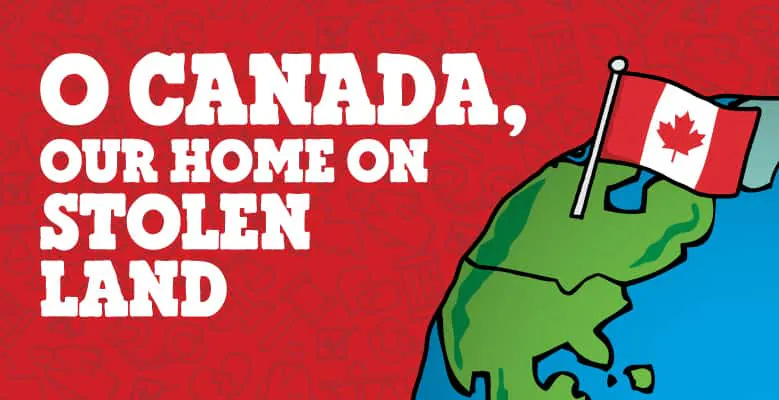
(image via Ben & Jerrys)

“British officials considered Treaty 13 a “confirmatory” purchase for lands that now comprise, in part, the City of Toronto and surrounding area. In 1787, John Johnson, the Superintendent General of Indian Affairs, held a council at the Bay of Quinte with the Anishinaabeg. There, he distributed gifts in recognition of their loyalty during the American Revolution and proposed the sale of lands near the Carrying Place at the mouth of the Humber River. While the Anishinaabeg accepted these presents to confirm their ongoing alliance, the Crown interpreted them as proof of payment for the land. 

But in the 1790s, colonial officials realized that the 1787 “surrender” did not meet their own legal requirements for a treaty. The “Deed of Sale” was blank (a common occurrence), with neither specific boundaries nor a price. The signatures of Anishinaabeg were on an entirely separate sheet of paper, and one of these signatories, Wabakayne (Waabikwanaye), had recently been murdered by a British soldier in Toronto. Doubts about the validity of the first agreement and the region’s growing importance led colonial officials to push for subsequent negotiations. 

In an effort to confirm the agreement, the Anishinaabe were offered fishing rights and reserve lands, and the Crown expanded the tract to 250,000 acres, expecting the community to accept $1 in return. Of course, the Mississauga did not and challenged the 1805 “purchase” over the next two centuries, resulting in a land claim settled in 2010. Several additional claims are outstanding, including for the Toronto Islands. 

While the Mississaugas continues to assert rights and some jurisdiction in Toronto, the city has also become home to the largest, most diverse Indigenous population in Canada, with some estimates suggesting that over 70,000 Indigenous people live and work in the city.” (Yellowhead Institute)

What is a land acknowledgements unless they recognize KKKlanada and its settlers active role in Indigenous land left, displacement, cultural erasure, structural violence, forced labor, increased police violence and targeting, residential schools aka death camps, the building of pipelines and dams, extraction of resources, poisoning of rivers and lakes, destruction of sacred lands, the theft and murder of Indigenous women and two spirit people, mass violence and killing of Indigenous children and the resulting unmarked mass graves, the foster care system designed as a tool for the further theft and erasure of Indigenous children and life , forced sterilizations, withholding of access to adequate and healthy food, water, air, medical care, and not to mention how this terrorist settler colonial government has broken every single treaty they have signed with Indigenous peoples over the centuries? Nothing good is built on genocide and land theft, KKKlanda like the rest of the settler colonies is that nothing good. Right now as we speak the klanadian governing class is further militarizing the arctic region in “fear” of russia and china but mostly to secure their claws deeper into the minerals becoming more accessible due to the melting of the ice and the war over resources in the north and the larger world. Settler colonialism and imperialism has not died yet!

As the zionist entity continues to commit genocide against the Palestinian people in order to further steal Indigenous Palestinian land, a genocide that the KKKlanadian government fully supports, arms, and commits in collaboration with the Israeli state, they also continue their reign of terror and occupation against Indigenous people on their lands here in Turtle Island. In occupied Palestine, the Israeli Occupation Forces are the real terrorists committing brutal acts of genocide and here it is the Royal Mounted Canadian Police, Toronto Police Services and every other government service acting as occupational forces, who are the real terrorists. Indigenous resistance to settler colonialism and racist capitalism is not terrorism, it is resistance, resistance to continued erasure, oppression and repression under occupation. In order for us to properly acknowledge Indigenous peoples and their lands we must deeply inspect our roles as settlers on this land and how very similarly to the Israeli settlers in occupied Palestine, we too occupy these lands, we too are enabling settler colonial expansion and all the benefits we receive here come at the cost of Indigenous blood, dignity and rightful sovereignty here as the first nations of these lands. Many of us here, especially racialized folks may not have come here by choice, whether the reason be due to our own displacement and enslavement from our Indigenous lands, or war, famine, disaster and many other forms of warfare of Western induced interference and violence, or the false promise of a better life and economic stability and surety, but nonetheless we are here, and because we are here I believe we have a responsibility to Indigenous peoples of these lands we occupy, to assist them in their over 500 year continued resistance to occupation by imperial forces, the same imperial forces occupying many of our own homelands. 

As someone Indigenous to Africa, who’s ancestors land has also been stolen and continues to be occupied, and whose ancestors were then kidnapped and scattered across the Western hemisphere and forced into enslavement in order to build their empires, I recognize how from the moment my ancestors reached these lands there were those who understood that their solidarity and loyalty was to the Indigenous people whose land they were displaced to and forced to work on and that in order to achieve liberation, solidarity between their groups was a necessity because their fight was one. I also recognize that there were those who from the beginning aligned with the colonizers, assisted them in their genocidal endeavors, and countered the resistance of Afrikans who were against their occupiers. These contradictions, these fights, these struggles, still continue today. For too long, we, Afrikans here in the diaspora whether we identify as Black, Caribbean, or Afro-Canadian have adapted to the settler mindset, we forgot where we came from, how we got here, and what we are supposed to be fighting for. For those of us of Afrikan descent who occupy these lands we must recenter ourselves and know that we are indigenous to Afrika and that no matter what this settler colonial state offers to us and how much it tells us that we are one of them, we are not one of them, we are not Canadians, and truly even for those of us who identify as Carribean I think it’s time we find a new name because, “Caribbean” comes from “Carib” which comes from the Spanish word “Caribal”, meaning “a savage, cannibal” which they, the Europeans referred to the Native people of these islands as, including the island I call home, known as “Dominica”, which the native Kalinago people named Wa’tu Kubuli, meaning “tall as her body”. We are Afrikans, and we are still fighting for our independence, on the continent and in the diaspora. Liberation for all Indigenous peoples from colonial occupation. Turtle Island is not free and Africa is certainly not free!

 Now more than ever we must understand our place and role in this struggle. No land acknowledgement can atone for the crimes that have been committed by this government and its settlers. So instead I offer a call to resist, a call to be in true solidarity with Indigenous peoples and their resistance because until this land is free and every other piece of land is free there will never be peace, nevermind peace, in the words of ancestor Kwame Ture, peace is the white man’s word, liberation is ours. All across the globe Indigenous peoples are fighting against colonialism, imperialism, capitalism, and every other form of physical, mental, emotional and spiritual occupation and warfare. From the water, land and air defenders across Turtle Island in Wet’suwet’en, Grassy Narrows, and Standing Rock, to the Axis of Resistance in Western Asia in Palestine, Lebanon, Yemen, Syria, Iraq, and Iran, to the resistance in Kanaky and the Philippines, to the resistance in the Sahel and the Alliance of Sahel States, Burkina Faso, Mali, and Niger, to Kenya, and Nigeria, to Venezuela, Bolivia, Nicaragua, and Cuba, and to Martinique and Ayiti where Haitian people are currently under KKKlanadian occupation amongst other imperial occupiers and to everywhere else occupation exists. We must support all resistance to occupation wherever they are and struggle to bring a better world into being. Across Turtle Island there are Native, water and land protectors, blocking pipelines, dams, railways, and every other instrument of colonial occupation and extraction, we must assist them in their fight whether that be by physically putting our bodies on the line, by providing financial, emotional, or spiritual support, and/or by educating ourselves about the histories and realities of this occupation and all occupations and putting that education into action by educating others and resisting against all forms of occupations through boycotts, divestments and sanctions of any state, company, organization or individual who is dependent on the theft of Indigenous life.

So unless we acknowledge all of the ways colonization continues, how we play an active role in their displacement and how Indigenous people still do not have sovereignty over their own land, none of our land acknowledgements are worthy and we should throw them in the trash. And as long as we enable this government and its genocidal nature by going about business as usual rather than being principled and disciplined in our solidarity with Indigenous resistance and existence in any of its many forms, we are not worthy. 

we all have blood on our hands

LAND BACK NOW!!!!!!!!!

From Afrika to Muscogee to Wai’tu Kubuli to all of Turtle Island,

All occupied territories must be returned to their rightful owners which means those of us currently occupying space that is not ours either need to get with it and join indigenous folks in their war against the state or get the fuck out and go somewhere else (hell perhaps)

Our relationships with the land we occupy vary as in my case of dominica and atlanta which means that the path to indigenous sovereignty as well as Afrikan unity will look different in every place. 

It’s up to the indigenous people of each land to decide the future of the land. they know the land and the land know them. if you are a settler it is not your choice so get with it or get out!

To my Afrikan siblings, wether you and your family have been here for almost 400 years because your ancestors were stolen from the Afrikan continent and enslaved in the northern british and french colonies, or if your ancestors travelled the underground railroads to build a “better” life than the enslavement in the american colonies only to find things were worse off in many cases up north, or if your ancestors are from the “west indies” and came post 1955 as domestic workers or farm workers, or if you have been displaced more recently out of the Afrikan continent because klanada, the united snakes, and the rest of the west are pillaging your ancestral land and sponsoring terrorist proxies recruiting our own people to kill the rest of our people!

We are Afrikans!

No matter how far they take us from the continent we will always be Afrikans, but that doesn’t mean we have to just leave behind the identities (e.g. my dominican identity) that have been forged through the fight to exist in spite of genocide, but it also doesn’t mean we need to be blindly nationalistic and rooting for the devil themself just because they are black (most of them are puppets of the west and hold none of our interests at heart, they say big words but we don’t see a thing). We must be critical of ourselves and our places in this world and the ways in which we too contribute to the displacement and erasure of indigenous folks on the land we now call home and our own indigenous folks on the land that we used to call home. 

This is my call for Pan-Afrikan unity and solidarity with the indigenous folks of Turtle Island (the western hemisphere) as well as Indigenous people everywhere! We are indigenous to Afrika and it’s past due that we unite in our struggle all across the diaspora and align ourselves intentionally with all indigenous people’s of the world fighting against capitalism and its many manifestations! 

Death to capitalism!

Death to settler colonialism!

Death to imperialism!

Death to neo-colonialism! 

Death to white supremacist patriarchy!

Death to zionism!

Long live the resistance! Long live our martyrs!

FREE THE PEOPLE! FREE THE LAND!

Nuestra América and the Black Radical Peace Tradition

 Black Alliance for Peace Haiti/Americas Team                                                                          12 Mar 2025

Black Agenda Report

Haitian revolution

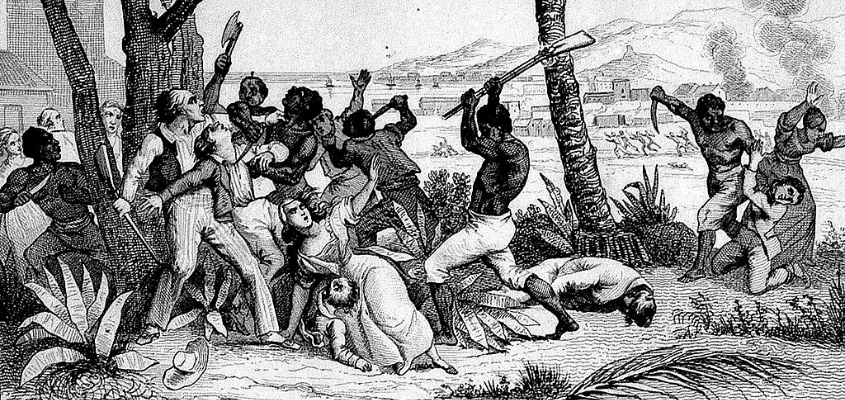
Depiction of Haitian Revolution – the war that liberated the region. Photo: Wikimedia Commons

The Black Radical Tradition is the rich legacy passed down by revolutionaries. It is an important tool today as we struggle to turn the Americas into a Zone of Peace.

The Revolutionary Foundations of Our Americas

On April 8, 1804, a few months after leading Ayiti (Haiti) to independence after a bloody 13- year revolutionary war against European enslavers and colonists, the new nation’s leader, Jean-Jacques Dessalines, articulated the most radical vision of freedom in history. In the proclamation, ‘Liberty or Death,’ Dessalines pronounced “I have avenged America,” decrying the barbarity and violence of racist Europeans. At the same time, he delineated a vision of a new Ayiti, and the world, based on sovereignty, dignity, and respect.

On January 1,1891, 87 years after Dessalines’s proclamation of an independent Haiti, and exactly 62 years before the triumph of the Cuban Revolution, José Martí published his famous work : Nuestra América or “Our America.” In this, Martí called for Latin America to unite against ongoing colonialism and in protest of U.S. domination through the Monroe Doctrine .

On December 10, 1963 in Detroit, Michigan, Malcolm X delivered his “Message to the Grassroots” speech where he criticized the Civil Rights Movement’s appeals to U.S. white supremacist foundations, individualism over grassroots organizing, and the failures of Black/African peoples in the U.S. to unite with the anti-colonial movements of the Global South. Significantly, Malcolm demanded more than “civil rights” for Black/African peoples in the U.S.; he called for true and complete human rights that would be the basis for the liberation of all African peoples globally. In this sense, Malcolm also urged us to reject the idea that the political identity of Black/African people is tethered to the U.S. settler project, proclaiming “[we are]… not ‘Americans’. We are victims of Americanism.”

All three of these visionaries died waging the struggle for liberation in the Americas. Dessalines was betrayed and assassinated two years into Haiti’s independence, a victim of the unresolved contradictory ideologies that fractured the nascent nation with tragic consequences. Martí, the writer and organizer, would die in battle in the struggle for Cuban independence. While Cuba would win flag independence in 1902, it would not escape the direct neocolonial chokehold of the U.S. and its corporate vultures until the revolution of 1959. Malcolm was slain by reactionaries and counterintelligence operatives in 1965, crippling the movement for Black/African liberation within the U.S.

In the ensuing years, and despite continuing resistance through individual and mass struggles, the promise of liberation has yet to be realized. Moreover, Malcolm would likely be disappointed with our failures, especially in the U.S., to carry on the vision of a Black/African struggle that is anti-colonial, Black nationalist, and internationalist.

Yet Malcolm’s words on that cold December day in Detroit still ring true. Like Martí, who called for Latin American unity, Malcolm argued for unity against a common enemy, calling for a revolutionary anti-colonial struggle of all African and colonized and oppressed peoples against white supremacy and imperialism:[1]

We have this in common: We have a common oppressor, a common exploiter, and a common discriminator. But once we all realize that we have this common enemy, then we unite on the basis of what we have in common. And what we have foremost in common is that enemy — the white man. He’s an enemy to all of us…In Bandung back in, I think, 1954, was the first unity meeting in centuries of Black people. And once you study what happened at the Bandung conference, and the results of the Bandung conference, it actually serves as a model for the same procedure you and I can use to get our problems solved…These people who came together didn’t have nuclear weapons; they didn’t have jet planes; they didn’t have all of the heavy armaments that the white man has. But they had unity….They began to recognize who their enemy was. The same man that was colonizing our people in Kenya was colonizing our people in the Congo. The same one in the Congo was colonizing our people in South Africa, and in Southern Rhodesia, and in Burma, and in India, and in Afghanistan, and in Pakistan. They realized all over the world where the dark man was being oppressed, he was being oppressed by the white man; where the dark man was being exploited, he was being exploited by the white man. So they got together under this basis — that they had a common enemy.

It is this perspective that would, towards the end of his life, push Malcolm to form the Organization for Afro-American Unity, a Pan-Africanist revolutionary project.

Malcolm’s understanding of militant grassroots struggle, self-defense, and uncompromising principles are key to the Black Radical Peace Tradition that underlies the work of the Black Alliance for Peace (BAP). While we take inspiration from the struggle of these heroic ancestors, we know that this struggle is far deeper and broader than the actions of individual men. This work is fundamentally about building collective power to oppose and defeat the militarization, repression, destabilization, subversion, and permanent war against our peoples. As our ancestor, and former Black Panther and political prisoner Safiya Bukhari reminds us , in order to engage in the battle against imperialism and build a new society, we must also revolutionize our collective practices and consciousness through our political programs.

In building collective power, we see it as critical to link the unifying compass of Martí’s “Nuestra América” with the militant struggle of the Black Radical Peace Tradition, and the fire of Dessalines call to avenge the Americas. “Nuestra América” is the call of revolutionary forces in the Americas to rally all the historically oppressed peoples of the region against colonialism and imperialism by claiming one contiguous land mass stretching from Canada to Chile. In understanding the political, social, and economic position of working class Black/African peoples in the United States as united with the working peoples of the Caribbean and Latin America, we take inspiration from “Nuestra América” and push for the liberation of “Our Americas”.

Our first step is to recognize that working class Black/African and Brown peoples of Latin America, the Caribbean, and within the U.S. have a common enemy that seeks to exploit and dominate the region. Our joint struggle is to defeat this enemy by attacking its various forms of domination – (neo)colonialism, patriarchy, capitalism, and imperialism. The second step is to organize ourselves to build meaningful alternatives to this domination that are based on popular sovereignty, collective self-determination, and human dignity. Both steps require an Americas-wide consciousness toward collective, grassroots, anti-imperialist struggle.

De facto Colonialism in the Americas

In the first month of Donald Trump’s second term as President of the United States, he and Secretary of State Marco Rubio proclaimed that U.S. will recapture the Panama Canal and annex Greenland and Canada; publicly threatened Mexico, Colombia, and Canada with tariffs; and all but declared war on Cuba, Venezuela, and Nicaragua – calling them “enemies of humanity” for refusing to capitulate to U.S. interests. Rubio also visited Panama, El Salvador, Guatemala, Costa Rica, and the Dominican Republic on a tour aimed to strong-arm these nations into strengthening ties with U.S. corporate and military interests and severing developmental agreements with China. 

But the brute tactics of the Trump regime, in trying to ensure U.S. “Full Spectrum Dominance” in the region, are not exceptional. “Full Spectrum Dominance” is the bipartisan doctrine articulated clearly in the Pentagon’s “Joint Vision 2020” paper that commits the U.S. to exercising military, political, and economic control across the globe to protect imperialist investments and interests – a stance that requires aggressively countering any threats, real or imagined, to its dominance. Trump’s regime, therefore, is building on the foundation laid by the U.S. duopoly’s economic and political agendas of exploitation and domination. 

It was not Donald Trump who initiated the current U.S.-led occupation and anti-democratic transition process in Haiti, or who recognized (for a second time) a sham President of Venezuela , or who provided U.S. military support to the right-wing narco-capitalist government of Daniel Noboa in Ecuador. These violations of national sovereignty in our region, and more, occurred through the Biden White House and Blinken State Department. Just as it was also not the Trump regime that oversaw the repression of the Stop Cop City movement and the Student Intifada in response to the U.S.-Israeli genocide on Gaza. Again, this was the Biden-Harris regime and the mayors of the U.S.’s largest cities, almost all of whom are Democrats. Even Trump’s decision to send deported immigrants to Guantanamo Bay, a military base which the U.S. has occupied in Cuba since 1903, is just making good on a thr eat that Biden issued in 2024 . And Biden’s declaration was simply a revival of Bush Sr. and Clinton’s use of Guantanamo to hold captive Haitian migrants.

Nevertheless, the current actions of the Trump regime have a different character. The U.S. has reverted to its brazen call for colonialist expansion, including full military control of the hemisphere, aggressive economic coercion, and divide-and-rule tactics – all wrapped up in vulgar white supremacist nationalism. The U.S./EU/NATO Axis of Domination is now more open and defiant!

The tools of this Axis of Domination are clear: military domination through the U.S. Southern Command (Southcom); economic warfare through sanctions, tariffs and other unilateral coercive measures; continuation of corporate extractivism over national development; and usurpation of state sovereignty through policies as the Global Fragility Act. And, of course, U.S. imperialism also depends on a captured class of neocolonial compradors (e.g., William Ruto in Kenya, Luis Abinader in the DR, Daniel Noboa in Ecuador, and Nayib Bukele in El Salvador) who work to uphold its Full Spectrum Dominance. Indeed, the Americas region remains under de facto colonial rule. And, despite years of anti-colonial resistance throughout the hemisphere, the current bold articulation of U.S. power seems calibrated to accelerate this full spectrum dominance while simultaneously attempting to paralyze and demobilize legitimate united resistance.

Black Struggle in the Heart of Empire

We understand that Black/African communities in the U.S. hold a unique position in the heart of empire. With a long and relentless history defined by enslavement, economic exploitation and underdevelopment, political subjugation, environmental degradation, and state violence, these communities suffer the brunt of domestic white supremacist domination. Black/African organizers and scholars have described the Black/African condition in the U.S. as akin to a colonial relationship. Robert Allen, for example, understood the colonial relationship in these terms: “[the] direct and over-all subordination of one people, nation, or country to another with state power in the hands of the dominant power.” In this case, white supremacist, capitalist power with direct control over Black/African peoples and communities. Economist William Tabb agreed with this and outlined the conditions faced by Black/African people in urban ghettos in the 1970s: a lack of labor freedom, suppressed wages, disposability and vulnerability of labor, and dependency on external aid (welfare) and political power (patronage) at the price of comprising collective needs.

This analysis of the internal colonization of Black/African people comes from a long and rich tradition of struggle and scholarship, outlined comprehensively by many including Harry Haywood and later Claudia Jones , Kwame Ture , and Robert Allen , as well as organizations as diverse as the Communist Party USA, the Student Nonviolent Coordinating Committee, the Black Panther Party, the Republic of New Africa, and the League of Revolutionary Black Workers. As scholar Charisse Burden Stelly details in Black Scare/Red Scare, Haywood and other Black communist organizers conceptualized the Black Belt Nation Thesis in the 1920-40s, understanding Black peoples predominantly residing in  the U.S. South (the “Black Belt”) as an internal colony with the right to national self-determination. After the second imperialist world war, Jones laid out the distinctions between Black populations in both the North and South, while furthering the analysis that all Black people represented a nation within the borders of the U.S. – a community of people with common language, economic life, and culture – all under assault by the racist U.S. state.

While the “internal colony” model is an important way to understand the position of Black/African communities in this white supremacist country, we must also acknowledge how class dynamics of the U.S. Black/African communities have continued to shift over years. Bruce Dixon, for example, asked us to come to terms with the reality that, “Today there are thousands of actual black people in the actual US ruling class…There are black lobbyists and corporate functionaries…the two dozen or so black admirals and generals…There are black media figures…and black near billionaires success stories are built on low wage viciously exploited black labor…”. We agree with Dixon in recognizing the Black compradors aiding and abetting U.S. white supremacist domination. Nevertheless, we think it imperative to assert that the majority of our Black/African communities are poor and working class, and bear the brunt of the domestic side of U.S. imperialist terror.

In 1969, Robert Allen predicted that, after the Black revolts of the late 1960s, a “neocolonial re-direction” would occur that would continue to subjugate the majority of Black people in the U.S. This re-direction would replace direct white rule and power over the internal colony with Black comprador intermediaries (e.g., national politicians, mayors, corporate executives and managers) who would be more palatable to the people they dominated. This follows the analyses of Kwame Nkrumah , Amilcar Cabral , Stephanie Urdang , and others on neocolonialism on the African continent. Allen argued that regardless of colonial or neocolonial rule, only a true and comprehensive anti-colonial struggle could lead to liberation for Black people in the U.S. This would require an economic program on a national level and the proliferation of international solidarity with ‘Third World’ peoples to defeat imperialism. For Allen, like for Malcolm, this would be a Black struggle that is anti-colonial and internationalist[2]:

[T]his struggle would aid materially in breaking black dependency on white society…The establishment of close working relationships with revolutionary forces around the world would be of great importance. The experiences of Third World revolutionaries in combating American imperialism could be quite useful to black liberation fighters. For the moment, mutual support between Afro-American and Third World revolutionaries is more verbal than tangible, but the time could come when this citation is reversed, and black people are well advised to begin now to work toward this kind of revolutionary, international solidarity.

In this sense, we link the struggles of the Black/African poor and working masses both to other marginalized communities in the U.S., and to all colonized and marginalized peoples’ globally.

This means the need to join the other liberation struggles of the colonized in the U.S., including Native peoples and lands, as well as the people of Puerto Rico, Guam, and the U.S. Virgin Islands. The framework of internal colonialism helps us see that the Black/African liberation struggle is not simply against racism or a pursuit of state-sanctioned civil “rights.” Instead, together with the global majority, we are engaged in a struggle for self-determination and sovereignty against a common enemy. We have a common struggle of liberation against empire.

For BAP, like for Malcolm, ours is a struggle for liberation, comprehensive human rights, and dignity – or what we call People(s)-Centered Human Rights [3]. This is, for us, an anti-colonial struggle, and a movement of solidarity, and collective resistance.

Where do we go from here?

In outlining necessary actions for Black radicals in 1969, Robert Allen asserted that “the continuing main task for the black radical is to construct an interlocked analysis, program, and strategy which offers black people a realistic hope of achieving liberation.” Any road to liberation requires challenging, disrupting, and defeating imperialism, domestically and globally. In terms of building a program to support radical and revolutionary struggle in “Our Americas”, we learn from freedom fighter Assata Shakur and the BLA who knew that any revolutionary struggle in the U.S. must engage in meaningful material solidarity with the struggles of the peoples and nations of the Global South.

In this moment, we aim to help advance this solidarity and struggle through the development of the U.S./NATO Out of Our Americas Network – a mass-based, people(s)-centered, anti-imperialist structure to support the development of an Americas-wide consciousness, facilitate coordination of our unified struggles and build from the grassroots a ‘Zone of Peace ’ in Our Americas. Along with BAP’s recently inaugurated North-South Project for People(s)-Centered Human Rights , the Network and the broader Zone of Peace campaign are efforts that consciously joins the Black/African liberation movements with the struggle for true popular sovereignty, self-determination, and decolonization in the Americas and globally.

This Network is a component of the collective Campaign for a Zone of Peace in Our Americas , which calls for an activation and coordination of grassroots movements and organizations to expel from our region the structures of U.S.-led imperialism that generate war and state violence—colonialism, patriarchy, capitalism. This campaign’s vision of “Peace” follows BAP’s principle of the Black Radical Peace Tradition :

Peace is not the absence of conflict, but rather the achievement by popular struggle and self-defense of a world liberated from the interlocking issues of global conflict, nuclear armament and proliferation, unjust war, and subversion through the defeat of global systems of oppression that include colonialism, imperialism, patriarchy, and white supremacy.

Achieving a lasting, durable peace in Our Americas requires deepening our coordination, internationalizing our grassroots struggles, resourcing our efforts toward effective solidarity, and growing our capacities for resistance.

We know that advancing the revolutionary consciousness of the people of Our Americas is a necessary foundation for the grassroots struggle for our sovereignty, self-determination, and dignity. We know that struggling in Nuestra América through the Black Radical Peace Tradition necessitates centering the ongoing resistance of the people of Haiti, defeating the neocolonialism that has co-opted unity and integration in the Caribbean, and supporting those nations fighting to assert their sovereignty and determine their destinies, particularly Cuba, Venezuela, and Nicaragua. We know that we can establish the collective power to oppose the U.S./EU/NATO Axis of Domination.

For our own survival, and the survival of the oppressed masses of the world, we must avenge Our Americas. The time is now.

[1]El-Hajj Malik El-Shabazz [Malcolm X]. (1963). Message to the Grassroots. BlackPast. https://www.blackpast.org/african-american-history/speeches-african-american-history/1963-malcolm-x-message-grassroots/

[2]Allen, Robert L. (1969). Black Awakening in Capitalist America: An Analytical History. DoubleDay, New York.

[3] “People(s)-Centered Human Rights (PCHR) are those non-oppressive rights that reflect the highest commitment to universal human dignity and social justice that individuals and collectives define and secure for themselves and Collective Humanity through social struggle.” https://peoplescenteredhumanrights.com/

A Prayer for Total Liberation & Re-unification

A Prayer for total liberation and re-unification

Meditation in The Creator is our capital.

Reason and sound logic are the root of our existence.

Love is the foundation of our existence.

Enthusiasm is the vehicle of our life.

Contemplation of The Creator is our companion.

Faith is the source of our power.

Sorrow is our friend.

Knowledge is our weapon.

Patience is our clothing and virtue.

Submission to the divine will is our pride.

Truth is our salvation.

Worship is our habit.

In prayer, lies the coolness of our eye and our peace of mind.

We pray that there will be total liberation in every single nation, until there is total re-unification, based on one common foundation,

Love,

Love in between it all. 

We deeply apologize and ask for forgiveness for all the times we have lied to, stolen, robbed, cheated, or abused our own people because colonization scrambled our bodies, minds and our souls,

but our hearts

but our hearts don’t forget that we are at war,

a war for life!

We give all our thanks and praises to The Creator,

the Prophets,

our Ancestors

&

all of the Ancients guiding us Home.

Home is Mother Earth, 

Home is the Hereafter,

Home is the in between, somewhere behind the veil, between Before & After.

We bare witness and we say,

Glory to our martyrs,

Freedom to our prisoners,

Victory to our resistance & Power to our great people!

In Unity, Struggle & Unity

Forward Ever, Backward Never!

Asé

 Revolutionary greetings, Welcome to Now Is The Time To Start Listening! NITT2SL! is a political education project with the intention of:                 

            Aligning,

            Mobilizing,

            Organizing,

            Educating,

            Building,

            Aiding, &

            Archiving the ongoing development of international revolutionary consciousness!


This project is rooted in many principles including, but not limited to:
  

    – Internationalism
    – Anti-Imperialism
    – Pan-Africanism
    – Intersectionality
    – Anti-Patriarchy
    – Anti-Zionism


The masses are the makers of history!

FROM THE MASSES TO THE MASSES!

NITT2SL! is currently run independently by a queer, New Afrikan, Pan-Africanist (Internationalist, Anti-Imperialist & Socialist), settled in occupied northern turtle island (aka KKKlanada)

@panafrikanrevolt